Structures
Book / Produced by partner of TOW
Life is full of visible and invisible structures all of which are fundamental to making sense of life in this world. There are structures obviously made by human beings (such as buildings and bridges), structures of living things (such as the bone structure of animals and the organization of a microscopic cell) and invisible structures (of such things as time, works of literature and the human psyche). In every aspect of everyday life—marriage, work, business, leisure, church, and social responsibility—we encounter structures for good or ill, often as a mixed blessing.
The word structures communicates two things: how the members of the whole are related to each other and how the whole achieves some purpose. The structure of a house expresses how the various building materials are put together so that the purpose of the architect is fulfilled. The structure of a poem describes how the words and lines are put together to create the impact intended by the poet. Structures help us to experience regularity, pattern, form and order. Without these there would be chaos, anarchy and confusion.
Intentional Order
The biblical account of creation describes God’s bringing order out of chaos, the formless void mentioned in Genesis 1:2. God separated light from darkness (Genesis 1:4), the sky from the waters (Genesis 1:6-7), the sea from the land (Genesis 1:9) and the day from the night (Genesis 1:14), so bringing order to the formless void. In the ancient Near East the symbol of disorder was the sea (or the sea monster)—that unpredictable and uncontrollable domain whose saline substance could not be used by an agrarian society. But in a number of places in the Old Testament, Hebrew poets declare God’s control over the sea. By setting a boundary for it, God made possible an ordered creation (Genesis 1:5-9; compare Job 38:8-11; Psalm 74:12-17; Psalm 93; Proverbs 8:29).
Living things were also created in a structured way: vegetation of all kinds appears with seeds to reproduce (Genesis 1:11-12); sea creatures, birds and land animals are all assigned their respective places to live and given the ability to reproduce (Genesis 1:20-25). Finally, human beings were made in God’s image so that they might have stewardship over creation (Genesis 1:26-28). Genesis 2:1 summarizes the work: “Thus the heavens and the earth were finished, and all their multitude” (NRSV, emphasis ours)—this last phrase often being translated as “host” or “army.” Like an army, the creation consists of a diverse collection of objects, properly arranged and organized. So creation is literally a kosmos, an ordered world, which, as the apostle Paul says, continues to be held together in Christ (Col. 1:17). But this world making, of which structures are so central, is not exclusively a divine work.
Genesis 2 suggests that part of the mandate God gave to Adam was also to bring order into the world. Adam was to take care of the garden (Genesis 2:15), an activity that involved creating and maintaining order. Adam was invited to name the animals (Genesis 2:19-20)—a work requiring insight into the nature of each one—thereby bringing order to the diversity among all the creatures. Part of the godlikeness of human beings is that people are invited to be cocreators with God, an activity that involves crafting structures.
To summarize, we live in a structured world; while God always remains free to do whatever he wants, there is an order to the world that God both creates and maintains. This structure is intelligible; we can discover something about this order by observing God’s creation. Human activity involves creating structures, though not at the same level as God’s creative activity.
Discerning Given Structures
Part of the human vocation is to discern and delight in the ordered way God has made the world in which we live and work. Even people who do not believe the biblical account of creation still assume the world is structured and that it is meaningful to ask questions about why things are the way they are.
Making the physical world intelligible. Scientific investigation would not be possible if the physical world were not structured (see Creation). Scientists try to explain the various patterns they observe in terms of laws. Johannes Kepler, for example, noted that planets travel in elliptical orbits. Isaac Newton then suggested that the reason for this was the gravitational force between a planet and the sun—an attractive force directly proportional to the product of their masses and inversely proportional to the square of the distance between them. This turned out to explain not only planetary orbits but also why apples fall to the ground. Newton’s gravitational law helps us understand something about the structure of our world.
In chemistry Dmitri Mendeleev’s periodic table of the elements demonstrates something of the internal structure of the hundred or so basic substances known to exist and explains family resemblances among them. In biology the process known as photosynthesis, whereby chlorophyll in a plant uses sunlight to combine carbon dioxide and water in the production of more complex compounds such as sugars, is another description of the structure of the world. Gregor Mendel’s observations regarding the breeding of peas has given us insight into the structure of heredity.
A dramatically new approach to exploring structures in the world is emerging from the field of chaos theory. Here the focus of attention is on how very complex and apparently random systems—systems too complex to be explained by the relationships among the various parts (that is, by natural laws)—can in fact be the result of very simple and well-defined causes. The structure of such things as clouds, coastlines and trees are of particular interest.
The term fractal was introduced to denote structures whose pattern repeats itself at different levels of magnification. Blood vessels, for example, are fractal. Beginning with the aorta of the heart, the blood vessels continuously branch and divide until in the capillaries the blood cells flow through single file. This structure has several advantages: (1) it is a very efficient way of transporting a limited supply of blood to each cell in the body; (2) the volume taken up by the blood vessels is only 5 percent of the body; and (3) the amount of information needed to encode this structure in the DNA is relatively limited since the pattern simply repeats itself over and over again. It turns out that many naturally occurring structures can be more easily understood in terms of fractal rather than Euclidean geometry, which limits itself to shapes such as squares, triangles, circles and so on. Concerning the latter, James Gleick suggests that Euclidean shapes “fail to resonate with the way nature organizes itself or with the way human perception sees the world” (pp. 116-17). The German physicist Gert Eilenberger comments on why we see beauty in natural landscapes but not in cityscapes: “Our feeling for beauty is inspired by the harmonious arrangement of order and disorder as it occurs in natural objects—in clouds, trees, mountain ranges, or snow crystals” (quoted in Gleick, p. 117, emphasis ours).
The structure of the physical world is wonderful—literally. It evokes wonder, as it did for the psalmist: “O Lord, how manifold are your works! In wisdom you have made them all” (Psalm 104:24 NRSV). So the scientific exploration of structures in space is a holy occupation, but so is the study of structures in time.
Structured time. The regular movement of the earth structures our lives: days are divided into periods of light and darkness, a time to work and a time to rest. Years are divided into seasons, which are often celebrated in some way. In the biblical account of creation, the days are also gathered together into groups of seven with the seventh being a day of rest—a time to align oneself with the pattern God established in creation (Exodus 20:8-11) and to reflect on God’s work in bringing about liberation (Deut. 5:12-15; see Leisure; Sabbath).
The Israelites, like most societies, celebrated various seasonal events (for example, new moon, harvest), but often combined these with the memory of significant events in their nation’s history: Passover celebrated the exodus from Egypt at the time of the barley harvest; the Feast of Weeks (Pentecost), originally a celebration of the wheat harvest, later became a commemoration of God’s giving of the law on Mt. Sinai; and the Feast of Tabernacles, coinciding with the olive harvest, was a celebration of God’s preservation of the chosen people through the wilderness.
The teacher of Ecclesiastes, reflecting upon various rhythms of life, notes how various actions are appropriate at one time but not at another: at one time it is appropriate to weep, at another to laugh; at one time to tear, at another to sew (Eccles. 3:1-8). So to discern the appropriate action for each day of our lives, we need wisdom.
The moral structure of the universe. According to the Bible the wise person has insight into the created order. Certain patterns of behavior are compatible with the way God intended; others conflict with it. Although freedom is often thought to be an escape from all structure, it is found by living within the boundaries of created structures.
The purpose of legal and Wisdom literature in the Bible is to make these structures clear, to instruct people on the way God intended life to be lived. The Ten Commandments are like a fence marking out an area in a field within which life will thrive. Breaking the law is like crossing the fence into forbidden territory; it is self-destructive behavior. In the Wisdom literature the field is divided, not so much into right and wrong, but into wise and foolish. Not only in morality but even in artistic expression, there are given structures.
Structure and the arts. Artists find avenues of expression by creatively working with the structure and content of their media: poets and storywriters crafting words into stanzas and plots, sculptors using hammer and chisel to create form from a piece of stone (often finding the structure in the stone itself), musicians transforming vibrations of strings, reeds or wind cavities into melody, harmony and rhythm (see Music). While human creativity is involved in all artistic expression, artists must respect the implicit structures and forms of their media.
Social and political structures. We were also created to live in families and nations, these being ordained by God as fundamental social structures (Romans 13:1). These are not merely invented by humans but designed by the Creator as a social context for our good. Without them we would destroy ourselves in random promiscuous relationships (were there no family) and in anarchy (were there no government and no nation).
Politics is essential to the human vocation and a service rendered for the commonweal (the common good). These contextual structures define a sphere for human activity and give people a sense of identity. The sin of Babel (Genesis 11:1-9) was precisely the desire to create a homogenous, uniform world without national boundaries, without diversity as expressed in nations and people groups. God intended national structures to exist. “From one man he made every nation of men, that they should inhabit the whole earth; and he determined the times set for them and the exact places where they should live. God did this so that men would seek him and perhaps reach out for him and find him” (Acts 17:26-27).
Being World-Makers
But in all of the above areas, human beings are not only those who inherit an intentionally structured world that God could consider as “very good” (Genesis 1:31); human beings are also world-makers. Human creativity involves making human structures: in the physical realm (through architecture, technology, science), in time (through planning and sabbath), in morality (through developing life patterns to express love and justice), in the arts (through making new things, which is the heart of creativity) and in society (through the art of government and politics).
In The Sacred Canopy Peter Berger has helpfully outlined the dynamic process in which we shape our world and in which our world shapes us. This involves three movements: (1) through cultural expression we relate to the world around us; (2) at some point we begin to experience the world, which has been shaped by our actions, as an object distinct from ourselves; and (3) this world then has the capability of acting back upon us and shaping our lives.
An example of this process is the creation of a nation. The founding fathers draft a constitution outlining the ideals (for example, equality of all people, democracy, freedom of speech) on which the nation will be built. Then they proceed to put in place people, institutions and laws to ensure that these ideals will be realized. But at some point the nation takes on a life of its own and is no longer dependent on the support of its founders. Finally the ideals expressed by the founders and protected and promoted by various means influence the lives of the citizens.
Every day we experience the influence of a wide variety of social structures—the nation, workplace, families, churches and so on. Each has been shaped by human activity, and each in turn shapes the lives of those living under them. But in world-making we face a double problem: we do not feel free to “make our worlds” the way we believe we should, and what we make turns out to be a mixed blessing, sometimes even a curse.
Fallen Structures and the Powers
Every day we encounter unjust and unloving structures, principles of conformity (for example, professionalism), negative cultural expectations, laws without moral foundations, technology as master and not mere servant, intractable institutions. With the growing awareness among social scientists of the role of social structures in shaping behavior, emotions and actions—often a detrimental influence—many theologians have begun to ask how the Bible addresses this reality. One approach has been to see a double reference in the phrase in Paul’s letters “principalities and powers” (or more literally, “rulers and authorities”)—one on a human level, another on a cosmic or spiritual level.
The background to this is in the Jewish belief that God assigned various angelic beings to rule over each of the nations (Deut. 32:8-9; Jub. 15:31-32; compare Psalm 82, where God chastises the members of the heavenly council for not extending justice to the poor). This idea seems to be reflected in Daniel 10, where Michael, the angel overseeing the affairs of Israel (Daniel 12:1), is in conflict with the prince of Persia. Heavenly and earthly events paralleling and influencing each other (compare Rev. 12:1-12) is typical of apocalyptic literature.
The fact that Paul uses words such as rulers and authorities to refer to cosmic powers—words that normally denote earthly figures—and the fact that he uses such words more than others that clearly refer to spiritual beings (for example, Satan and demons) suggest that he has both earthly and heavenly realities in mind when he speaks of rulers and authorities. Thus, when he writes in Colossians that all rulers and authorities have been created in, through and for Christ (Col. 1:16); that Christ is the head of every ruler and authority (Col. 2:10); and that Christ, by means of the cross, disarmed, exposed and triumphed over the rulers and authorities (Col. 2:15); he is referring not only to spiritual realities but also to structures of human existence.
Paul further expounds the relationship between spiritual powers and earthly structures in Ephesians, where he points out that believers struggle against rulers and authorities (Ephes. 6:12). This, however, is the conclusion to his section on the ethical implications of the gospel in which he appeals for unity within the church (Ephes. 4:1-16), godly living in the midst of a pagan society (Ephes. 4:17-5:20), husbands and wives loving each other (Ephes. 5:21-33), children and fathers relating properly (Ephes. 6:1-4) and slaves and masters showing mutual respect (Ephes. 6:5-9). When Paul talks about “spiritual” battles, he has in mind the very concrete situations of life: marriage, family, work, church, society. It is in these structures that spiritual forces are at work.
A further insight comes from the New Testament about the power of sin. The word sin normally refers to an act contrary to God’s will. But Paul also uses the word to refer to a power that enslaves people to a life of self-centered activity (Romans 5-8). The significance of choosing the word sin to refer to such a power (rather than Satan or demons) appears to be that Paul saw an interrelationship between the acts and the power. Clearly, the power promotes the acts, but it is also true that the acts feed the power.
Recall Berger’s description of world-building. Once again we can see how this applies. We are world-builders, but we are sinful ones. Therefore, everything we build in our world—institutions, culture and so on—is at least to some degree infected by sin. As this world takes on a life of its own and shapes the lives of people, it will also promote sin. How are we to relate to fallen existing structures or to the task of creating new ones?
Grappling with Structures
There are four historic approaches to relating to structures as powers, each one involving a view of reality (metaphysics) and an approach to the human vocation: (1) exorcism and intercession (dealing with the demonic in society), (2) suffering powerlessness (bearing witness to the kingdom of God as a redeemed society and refusing to resist evil), (3) creative participation (taking our part, to function as regents and stewards, in all the institutions of the world) and (4) engaging in a just revolution (overthrowing the existing structures, with violence if necessary).
In the way of exorcism, the assumption is that our role is to continue the liberation of individuals from bondage to Satan by preaching and prayer. The powers are much more than social structures. The social structures are merely fronts for Satan’s grand plan to woo people away from God.
The way of suffering powerlessness is patterned after the way of the cross. Many in the Anabaptist tradition take this approach. Our role is not to change society directly but rather to witness. When we do this, even at the loss of our own lives, we expose the fallen state of all human rule and reflect God’s action in the cross and the coming kingdom. The powers have been colonized by Satan and can only be overthrown by God. When the world is off center, it would take a lever with a fulcrum outside the world to move it. Christians, according to this approach, believe that the lever to move the world is the wooden cross.
The way of creative participation assumes that our role is to be stewards on earth. According to the creation mandate we are called to order and husband all the dimensions of societal and creational life. The structures have been colonized by Satan (according to some) or merely reflect the fallen condition of human beings (according to others). But it is possible, indeed it is our vocation, to bring these structures into conformity to the rule of Christ. We do this through our daily work, social action and mission. The danger in taking this approach exclusively is to minimize the demonic and the nonhuman forces and personages that we encounter in our public discipleship.
The final option is the way of the cleansed temple with Jesus as the model revolutionary. It has been promoted actively by liberation theologians, both Catholic and Protestant. One such Christian revolutionary, Dom Helder Cmara, summarized the dilemma implicit in taking this approach with these searching words: “When I give people food, they call me a saint. When I ask why there is no food, they call me a communist” (quoted in Brown, p. 86).
Which approach is right? Indeed all, with the possible exception of the last, have strong support in Scripture and may be chosen in particular circumstances. The people of God as a whole must engage in a full-orbed approach. But discernment is needed.
Christ’s complete victory over the principalities and powers, over Satan, sin and death, assures us that there is nowhere in the universe so demonized that a Christian might not be called to serve there. We fight a war that is already won. Therefore, as much as is now possible, Christians should Christianize the powers, to “peace” the powers through involvement in business, education, government, politics and social action, all the while knowing that the task of finally subjugating them is reserved for Christ alone (Ephes. 1:10; Phil. 2:10-11). We work on the problems of ignorance, pollution, food distribution, injustice, genetic engineering and the proliferation of violence and weaponry, knowing that this work is ministry and holy. In the short run our efforts may seem futile, but in the long run this work will be gloriously successful because we are cooperating with what Christ wants to do in renewing all creation. In this we must live with heaven-mindedness, knowing that Christ said, “All authority in heaven and on earth has been given to me” (Matthew 28:18). While the beast is master here for a moment (Rev. 13:1-18), all dimensions of social unity will be restored according to God’s design. And in the New Jerusalem the redeemed principalities and powers will provide structure for our common life and work (Rev. 21:24).
» See also: Justice
» See also: Organization
» See also: Power
» See also: Principalities and Powers
» See also: Structures, Church
» See also: System
References and Resources
C. Arnold, Ephesians: Power and Magic (Cambridge: Cambridge University Press, 1989); P. L. Berger, The Sacred Canopy: Elements of a Sociological Theory of Religion (Garden City, N.Y.: Doubleday, 1967); H. Berkhof, Christ and the Powers, trans. J. H. Yoder (Scottdale, Penn.: Herald, 1962); R. M. Brown, Spirituality and Liberation (Philadelphia: Westminster, 1988); W. Carr, Angels and Principalities: The Background, Meaning and Development of the Pauline Phrase “kai archai hai exousia” (Cambridge: Cambridge University Press, 1981); J. Ellul, The New Demons (New York: Seabury, 1975); J. Gleick, Chaos: Making a New Science (New York: Penguin, 1987); H. Schlier, Principalities and Powers in the New Testament (New York: Herder & Herder, 1964); W. Wink, Engaging the Powers: Discernment and Resistance in a World of Domination (Minneapolis: Fortress, 1992); W. Wink, Naming the Powers: The Language of Power in the New Testament (Philadelphia: Fortress, 1984); W. Wink, Unmasking the Powers: The Invisible Forces That Determine Human Existence (Philadelphia: Fortress, 1986).
—Gerry Schoberg and R. Paul Stevens




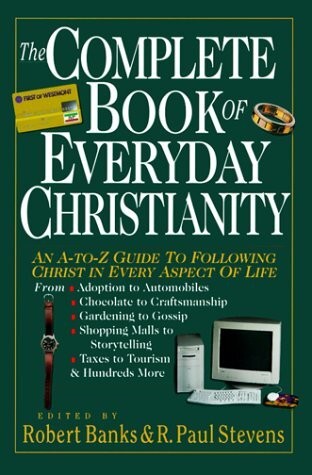
The authors Robert Banks and R. Paul Stevens have partnered with The Theology of Work Project to offer The Complete Book of Everyday Christianity in its entirety here. All rights reserved.
This resource was originally published in 1997, and the text has not been updated.